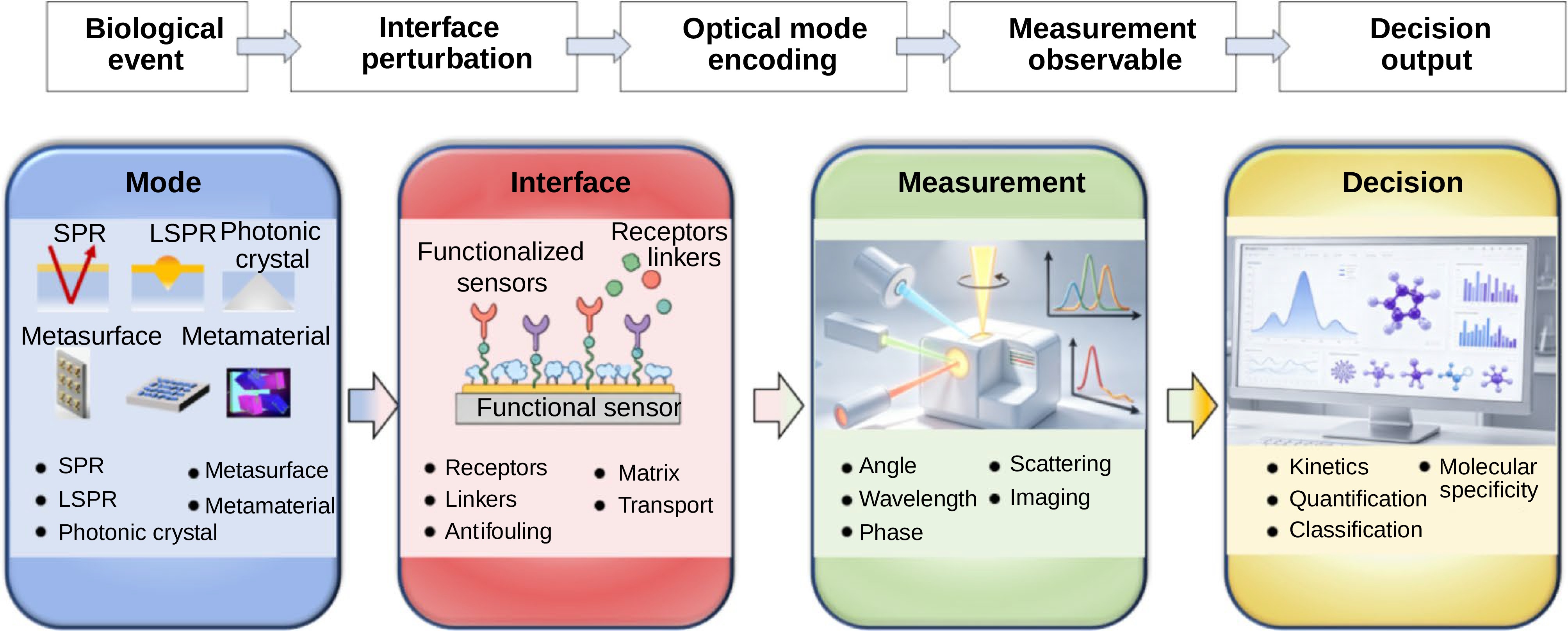
From device metrics to information fidelity: reframing nanophotonic biosensing through mode–interface–measurement–decision
从设备指标到信息保真度:通过模式-界面-测量-决策重新构建纳米光子生物传感
装置指標から情報忠実度まで:モード−界面−測定−意思決定によるナノフォトニックバイオセンシングの再構築
장치 측정치에서 정보 충실성까지: 모드-인터페이스-측정-결정을 통해 나노 광자 바이오센싱을 재구성합니다.
De las métricas del dispositivo a la fidelidad de la información: reestructurar la biosensoría nanofotónica a través de la decisión de modo-interfaz-medición
Des métriques de dispositif à la fidélité de l'information: recadrement de la biosensing nanophotonique par le biais de la décision de mode-interface-mesure
От показателей устройства до верности информации: переформирование нанофотонного биосенсора через режим-интерфейс-измерение-решение

Reviews and Discussions